
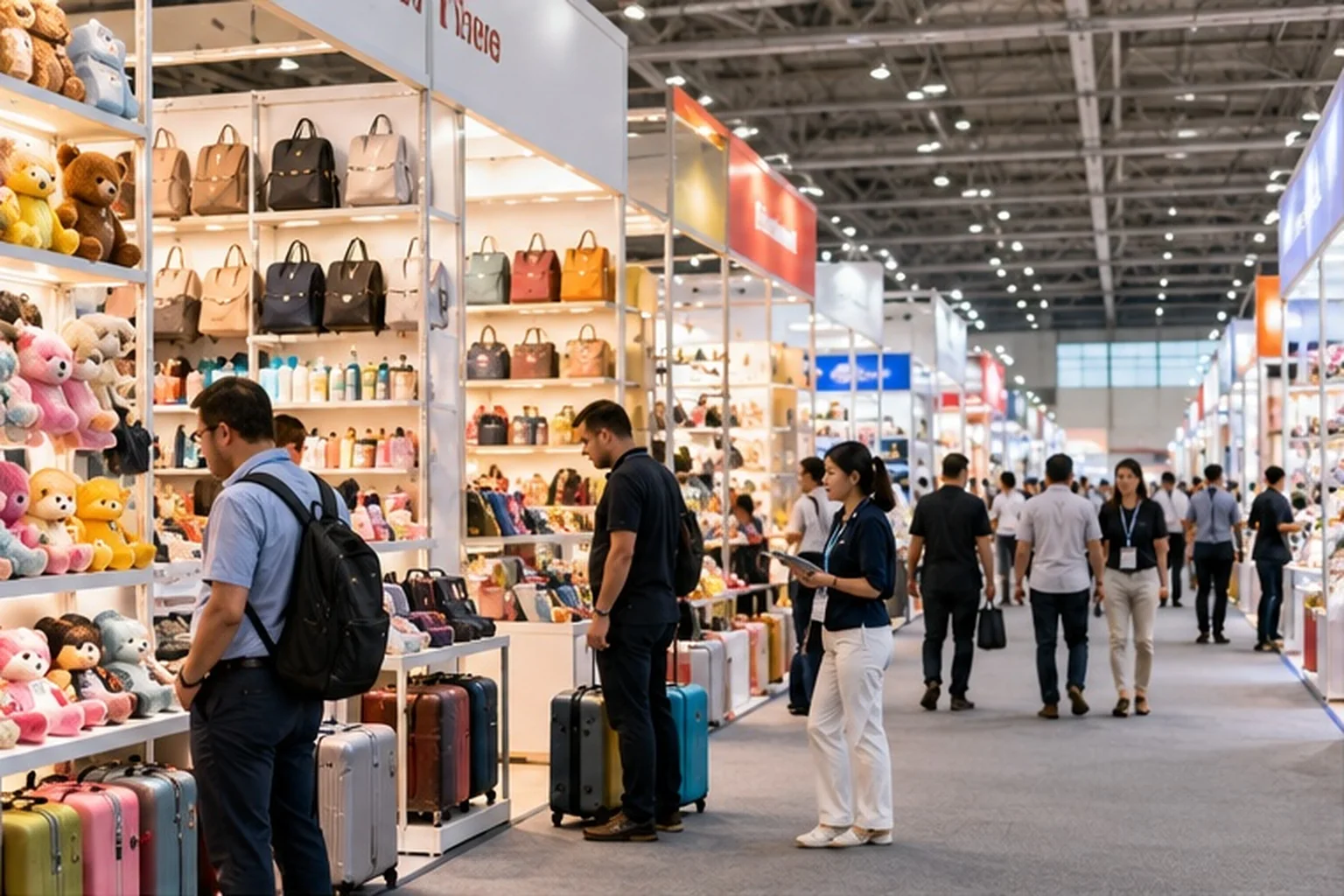
Phase 3 of the 140th Canton Fair runs from 31 October to 4 November 2026, and it is the phase built for retail assortments rather than industrial buying. Toys, apparel, bags, home textiles, personal care, pet products: the categories that fill a shop, not a production line.
That breadth is the opportunity and the problem. A buyer who tries to cover all of it will spend three days walking and one evening sorting catalogues. A buyer who arrives with two or three category families in mind will leave with comparable quotes. This article is a map for the second kind of buyer.
Phase 3 Is a Consumer Goods Phase
The official exhibition information places the consumer-facing sections in this final phase, including toys, children's and maternity products, apparel, footwear, bags and luggage, home textiles, office supplies, personal care products and pet products. Some of these sections sit in dedicated zones, which is why a floor plan matters more here than in the narrower phases.
The practical consequence is that Phase 3 rewards merchandising judgement more than technical judgement. There are fewer datasheets to argue over and more questions about presentation, packaging, price position and whether a range holds together on a shelf.
Five Category Families and What They Reward
Grouping the sections into families makes the fair easier to work. Each family has a different buying logic, and mixing them in one afternoon produces shallow notes on all of them.
- · Toys and children's products: age grading, safety documentation and packaging that communicates the play pattern
- · Apparel and footwear: size consistency, colour fastness, fabric weight and the tolerance on a size chart
- · Bags, luggage and fashion accessories: hardware quality, stitching, lining and how the item photographs
- · Home textiles and office supplies: repeat purchase, carton economics and the ability to reorder a stable specification
- · Personal care and pet products: ingredient or material disclosure, labelling rules and claims that survive scrutiny
The families differ in how quickly a mistake shows up. A toy that fails an age grading test is stopped at the border. A bag with weak stitching fails in the customer's hands three weeks after delivery. Both are expensive, but only one of them is visible before you pay.
What a Small Retailer Should Take and What to Leave
A smaller retailer does not need a sample from every section. A narrow assortment built around one clear customer problem is easier to test, easier to replenish and easier to explain to a shopper.
The question worth carrying through the halls is not what is new. It is what fits the buyers you already have, at the price point you already sell at, within the shipping profile you can afford. A range that requires a new customer to work is usually a range that will sit in the stockroom.
Consider what a category costs you beyond the unit price: the shelf space it occupies, the cash it ties up, the returns it generates and the staff time it consumes. A category that turns slowly but returns nothing is more expensive than a faster one with a thinner margin.
Build a Category Research List
The fair is a research instrument before it is a buying instrument. Use it to fill a structured list per category rather than to collect brochures, and the notes will still be usable in December.
- · Consumer use case: who buys it, for what occasion, and what they would otherwise buy
- · Comparable products: what the same item sells for in your market, from whom, and at what quality level
- · Packaging formats: retail box, blister, polybag, gift box, and which one your channel expects
- · Target retail price: the price you need to hit, worked back to a target landed cost
- · Local requirements: tests, markings or labelling that apply to this product in your market
Filling five lines per category is enough to make a first judgement. It is also enough to notice when two suppliers are describing different products with the same name, which happens more often than buyers expect.
Compare Categories After the Show
The comparison that matters happens after the halls close, when the samples are on a table and the catalogues are in a pile. Compare categories against each other, not only suppliers within a category.
- · Demand evidence: sell-through data, competitor gaps or a tested adjacent product, rather than enthusiasm
- · Landed cost: freight, duty, packaging and inspection, not the ex-works price alone
- · Replenishment: lead time, minimum quantity and whether a repeat order keeps the same specification
- · Presentation: whether the product photographs well and survives delivery in a condition worth selling
- · Risk: certification, returns rate and how quickly a defect would become your problem
A category that scores well on the first two and badly on replenishment is a one-off purchase, not a product line. Deciding that in November is cheaper than discovering it in February.
FAQ
Which products are shown in Canton Fair Phase 3?
The consumer-facing sections, including toys, children's and maternity products, apparel, footwear, bags and luggage, home textiles, office supplies, personal care products and pet products. The official exhibition information is the reference for the exact section list and zone layout.
Is Phase 3 useful if I cannot attend in person?
Yes, with a narrower question. The official exhibitor and product discovery channels are enough to build a category shortlist and request quotations on a defined specification. Attending adds the ability to handle samples, which is the part that cannot be replaced remotely.
How many categories should one buyer cover?
Two or three families is realistic for a week, and usually enough for a season. Covering more produces notes that are wide and shallow, and shallow notes are what turn into orders that do not repeat.
Plan the Assortment Before the Halls Empty
Phase 3 ends on 4 November 2026. The buyers who get value from it are not the ones who cover the most ground, but the ones who leave with a category shortlist, a landed cost per category and a decision about what not to buy.
Easy Buy China works with overseas retailers and distributors on consumer goods from China's main export hubs, including supplier shortlisting and quotation comparison and pre-shipment inspection. If you are preparing for the week itself, the Phase 3 preparation guide covers the shortlist and sampling workflow, and the Canton Fair autumn 2026 guide has the phase map, dates and registration steps.
For toys, electrical children's products and anything carrying a compliance mark, our guide to CE, FCC and RoHS requirements explains what the documents have to prove. Contact us with your category list, target retail price and destination market, and we will tell you which families are worth your floor time.