
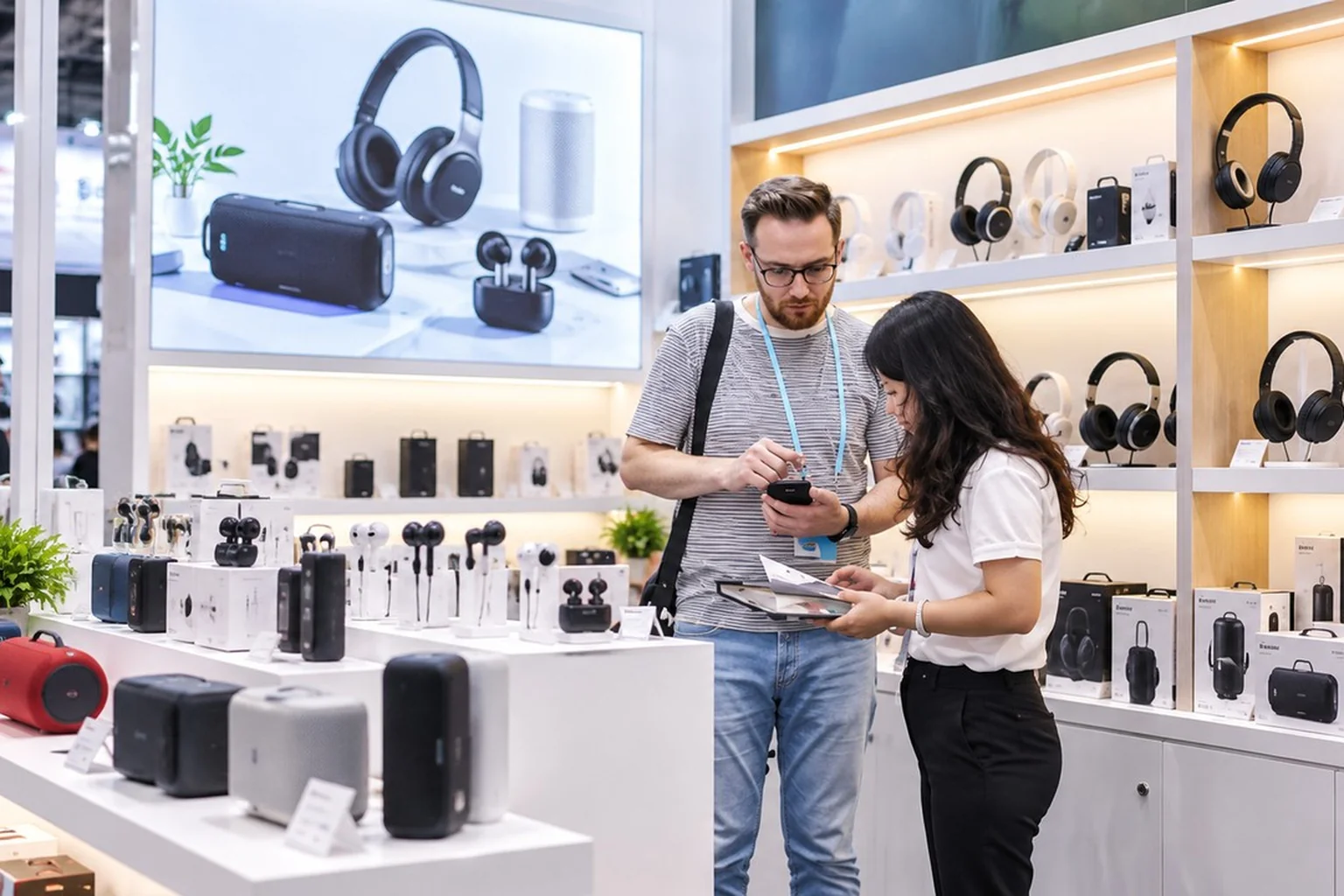
The fourth quarter is the most expensive quarter in which to learn a lesson about electronics. Demand is real, the catalogue is attractive, and the cost of a wrong decision does not appear until January, when the returns arrive and the warranty claims start.
This is not an argument against buying electronics in Q4. It is an argument for buying on evidence rather than on enthusiasm, and for treating each purchase as something that has to pass gates rather than something that has to be negotiated.
Why Q4 Rewards Discipline More Than Range
A small retailer buying electronics in Q4 is usually doing two things at once: replenishing what already sells and testing one or two new categories. The first is arithmetic. The second is a bet, and it should be sized like one.
The mistake is letting the second consume the budget of the first. A broad multi-category order placed in November spreads the risk across products nobody has tested, and it turns a working assortment into a warehouse of variants.
Choose Categories You Can Support, Not Categories That Trend
Support is the operative word. Every electronics category carries a service obligation after the sale: pairing questions, firmware updates, plug compatibility, battery behaviour, app availability. The right category is the one your team can answer questions about in your own language.
- · Charging and cables: the simplest service profile, but a category where certified output and cell quality separate good stock from returns
- · Audio accessories: high attach rate and high return rate, so require a tested sample before committing to volume
- · Wearables: attractive margins, but they live or die on app support and regional compatibility
- · Smart home devices: the longest support tail, because a cloud service can change independently of the hardware
- · Phone accessories: flexible on quantity and colour, and the easiest category in which to start small
If you already sell phone accessories, the Huaqiangbei market guide covers the channel where those ranges are actually assembled. For the categories with the heaviest technical load, our guides to power banks and chargers and to smart wearables set out what the compliance files have to show.
A CE or FCC Mention Is Not Evidence
A listing that says CE or FCC proves that someone typed those letters. It does not prove that the specific device can be lawfully sold in the specific market, because the obligations attach to the product, the radio module, the battery and the packaging, and each of them is documented separately.
Ask for the documentation that matches the model you are buying, and check the identifiers: the model number on the report, the model number on the carton and the model number on the invoice should be the same string. Where they differ, ask why before you pay.
For wireless devices, batteries and mains-powered accessories, the file usually involves several different regimes at once. Our guide to CE, FCC and RoHS requirements explains which document answers which question.
Test What the Customer Will Actually Experience
Specifications describe a device. Customers experience a product, and the gap between the two is where returns come from. Test the things that generate complaints, not the things that generate headlines.
- · Earbuds: pairing on both iOS and Android, microphone quality on a real call, and battery behaviour after ten charge cycles
- · Chargers and power banks: rated output under load, heat under sustained draw, and cell provenance rather than capacity claims
- · Smart home devices: app availability in your market, region settings and what happens if the cloud service changes
- · Packaging: whether the retail box survives transport, and whether the claims printed on it are accurate
- · Returns handling: who pays for the return, who decides fault, and how long a replacement takes
MOQ and Landed Cost, Side by Side
A low unit price is only meaningful next to the quantity you must buy to get it. Minimum order quantities are usually set per model and often per colour, which means a mixed order can be cheaper than it looks or much more expensive than it looks, depending on how the factory counts.
- · Unit price at your actual quantity: not the price at a volume you will not reach this quarter
- · Expected defect rate: what the supplier accepts, and what it costs you to handle locally
- · Packaging and branding: whether custom print raises the MOQ or adds a tooling charge
- · Small-batch freight: the per-unit cost when the shipment is too small for a full container
- · Warranty cost: the reserve you need to hold against replacements over the support period
Put the total against the margin you expect, and then against the margin after one bad batch. Electronics bought at a good unit price with an unmanaged defect rate is not a cheap purchase; it is a deferred expense.
FAQ
Is Q4 a bad time to start sourcing electronics from China?
It is a bad time to start without samples and documents, because there is no room left to correct a mistake before the season ends. With a tested sample, valid compliance files and a confirmed production date, Q4 orders work. Without them, the order is a bet on the supplier's paperwork.
How do I check whether a CE or FCC claim is real?
Ask for the test report or certificate that names the exact model, check that the model number matches the carton and the invoice, and confirm the standard cited applies to your destination market. A logo on a listing is not evidence.
What is a realistic first order for a small retailer?
Usually one carton per colour or per model, which is enough to test sell-through and returns without tying up capital. Ask the supplier for the carton quantity rather than the minimum order quantity, because the carton is often the real constraint.
Five Gates Before You Pay
The gates are simple, and each one is a yes or a no rather than a score.
- · Supplier identity: the entity on the contract is the entity that will ship, and the bank details match the contract
- · Sample sign-off: the production sample is approved in writing, with photographs of the version you approved
- · Compliance file: model-specific, destination-specific and dated, not a generic certificate
- · Commercial terms: quantity, price, defect handling, payment terms and lead time all fixed in one document
- · Logistics and inspection: the inspection arrangement is agreed before the carton is closed, and the freight is booked after it
Easy Buy China works with overseas retailers on electronics from China's main export hubs, including pre-shipment inspection and supplier comparison against a fixed specification. Contact us with the product list, the quantity and the destination market, and we will tell you which of the five gates your order is not yet ready to pass.