
Portable power products sourced from China serve two purchasing needs that look similar on a shelf and behave very differently in use: starting an engine that has gone flat, and supplying stored electricity to appliances or equipment. Wholesale buyers who treat them as one category tend to order the wrong mix.
This feature looks at one manufacturer's published catalogue, CARKU, to show how the two lines are structured and what a buyer should verify before committing to an order. All specifications below are brochure figures supplied by the manufacturer. They are not independently tested results, and they must be confirmed against the final SKU before any specification sheet is published.
Two Product Lines That Are Not the Same Product
The jump starter catalogue lists dedicated 12V and 12V/24V emergency starting devices, including compact models aimed at roadside use. These are built around a short, high-current discharge into a vehicle battery.
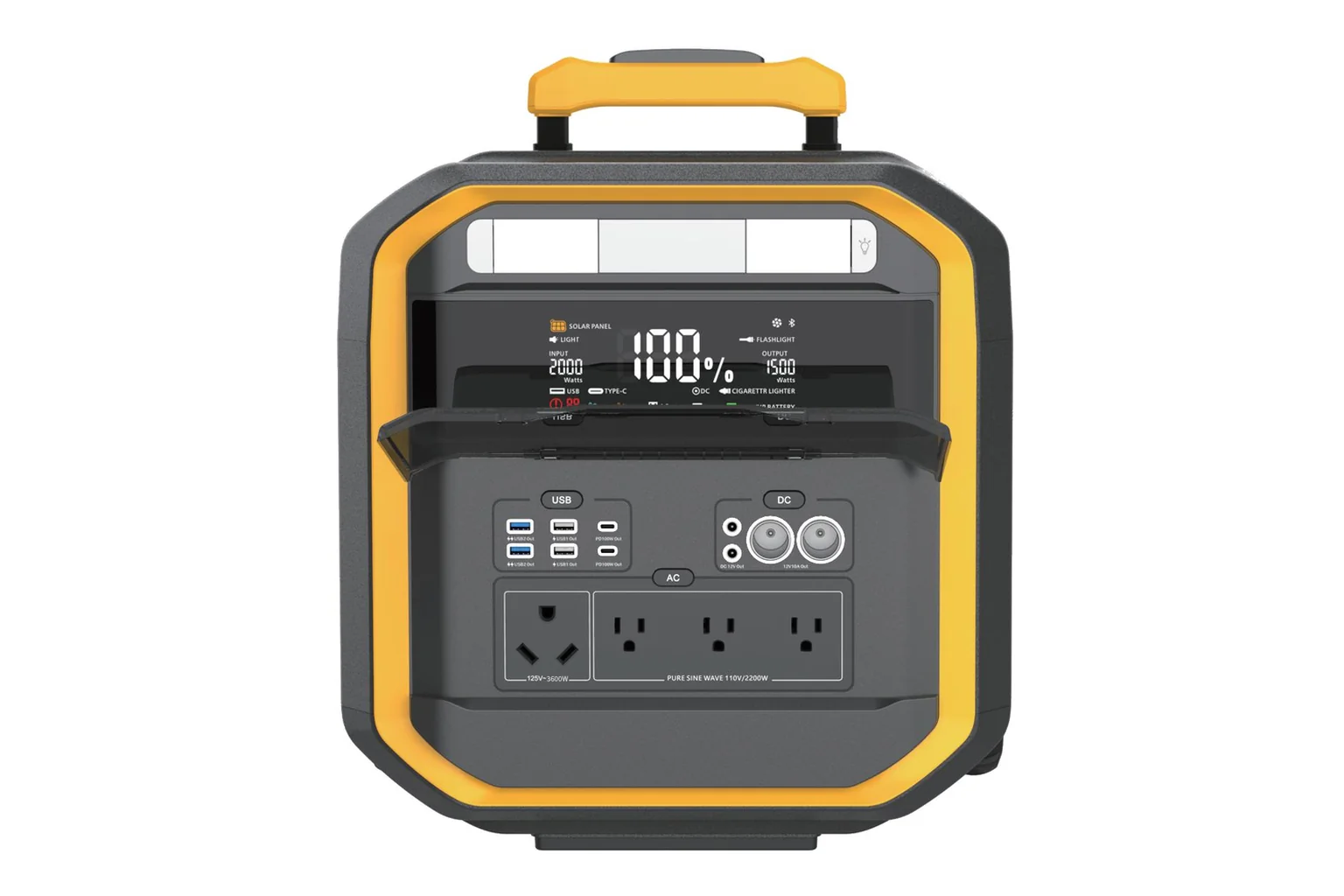
The separate LIFEBMS catalogue presents battery-powered portable power stations with AC and DC outputs, sized for running appliances over hours rather than delivering a burst into a starter motor. Some power stations list a 12V jump-start function as an additional feature, but they should still be sold as power stations, not marketed as dedicated jump starters.
That distinction is commercial, not semantic. A buyer who mixes the two in one listing will field returns from customers who expected a jump starter and received a camping battery, or the reverse.
What the Published Catalogue Lists
The following figures come from the manufacturer's brochures. Output ratings and configurations vary by version and region, so the exact SKU, socket type and voltage need to be confirmed in writing before any of these numbers appears in your own listing.
- · PB-126: 512Wh capacity, 1100W output, listed as a portable power station
- · PB-58: 1408Wh capacity, 1500W output, listed as a portable power station
- · PB-112: 1408Wh capacity, 2400W output, listed as a portable power station
- · PB-91: 2816Wh capacity, 3000W and 3600W variants, listed as a high-capacity power station
- · PB-78: 2816Wh expansion capacity, listed as an expansion battery and not a standalone unit
Two notes on that list. The PB-91 output depends on the version and the regional configuration, so the wattage alone does not identify the SKU. And the PB-78 is an add-on battery for a compatible host unit, which means it cannot be sold to a customer who does not already own the host.
What to Verify Before Ordering
The gap between a brochure and a purchase order is closed by documents and samples, not by confidence. Five areas carry most of the risk.
- · Application and output: capacity in Wh, continuous AC wattage, AC voltage and frequency, connector layout, and the actual load the customer will run
- · Starting function: for any model advertising engine start, the compatible vehicle and battery type, the starting current test method, the clamps supplied and the operating instructions
- · Chemistry and safety: which cell chemistry applies to each SKU, what the battery management system protects against, and the test documentation behind those claims
- · Export compliance: battery transport paperwork including UN 38.3 test summaries where applicable, plus the destination market's electrical, labelling and product safety requirements
- · Commercial terms: minimum order quantity, branding and retail packaging options, final configuration, warranty, accessories, lead time and after-sales support
The voltage point deserves emphasis. A unit built for a 110V market cannot simply be shipped to a 230V market. The plug, the socket layout and the internal configuration all differ, and a mismatch is a safety issue rather than an inconvenience.
Where Each Line Fits in Retail
The two lines move through different channels, and the assortment decision usually becomes clearer once that is separated.
- · Dedicated jump starters: automotive accessory shops, roadside assistance services and seasonal emergency channels
- · Compact stations: camping, outdoor and mobile work buyers who need a few hundred watt hours
- · Mid-capacity stations: RV owners, small appliance backup and short site work
- · High-capacity stations: home backup, longer job sites and equipment that draws sustained load
- · Expansion batteries: existing owners of a compatible host unit, sold as an add-on rather than a first purchase
Expansion batteries are the easiest line to misprice, because they only sell to customers who already bought the host. That is a smaller addressable market than the raw capacity figure suggests.
Reading Brochure Specifications Honestly
A capacity figure in watt hours describes stored energy, not usable runtime. The runtime a customer experiences depends on the load, the inverter efficiency, the depth of discharge the system allows and the temperature.
The same applies to output ratings. A 3000W figure usually describes a peak or a specific configuration rather than a continuous load at every socket. Ask the supplier to state continuous output, peak output and the conditions each refers to, and to put it in writing.
None of this is a reason to avoid a product line. It is a reason to request documents rather than accept a number, and to keep the manufacturer's claims separate from your own listing copy.
FAQ
Can a portable power station replace a dedicated jump starter?
Not as a like-for-like substitute. Some power stations include a 12V jump-start function, but a dedicated jump starter is built for a short high-current discharge and is usually the more reliable choice for roadside use. Buyers should position them as separate products.
What documents should I ask for before ordering?
Battery transport paperwork including UN 38.3 test summaries where applicable, the test reports behind any safety or chemistry claim, the destination market's electrical and labelling requirements, and a written specification of the exact SKU including voltage and socket type.
Are the catalogue figures in this article independently verified?
No. They are manufacturer brochure figures reproduced to show how the lines are structured. They have not been independently tested, and output ratings vary by version and region. Confirm every figure against the final SKU before publishing your own specification.
Request a Sourcing Quotation
Buyers comparing portable power stations, expansion batteries or dedicated jump starters from China can send the target model, destination country, expected volume, required AC specification and branding request, and we will coordinate supplier quotations and clarify product information before an order is placed.
Easy Buy China works with overseas wholesalers on power and charging products from China's main export hubs, including pre-shipment inspection and supplier shortlisting. The ranges we currently handle are listed on our power and charging category. For the wider category, our guide to wholesale power banks and chargers from China covers the adjacent product group, and our guide to CE, FCC and RoHS requirements explains what the compliance documents have to prove.
Contact us with the model, market and volume, and we will tell you what has to be confirmed before the order is worth placing.
Note on this article: it is a product sourcing feature based on manufacturer brochures, not a report of independently verified product launches. Brand authorization and export market compliance have not been established, and no commercial relationship with the brand should be inferred.