
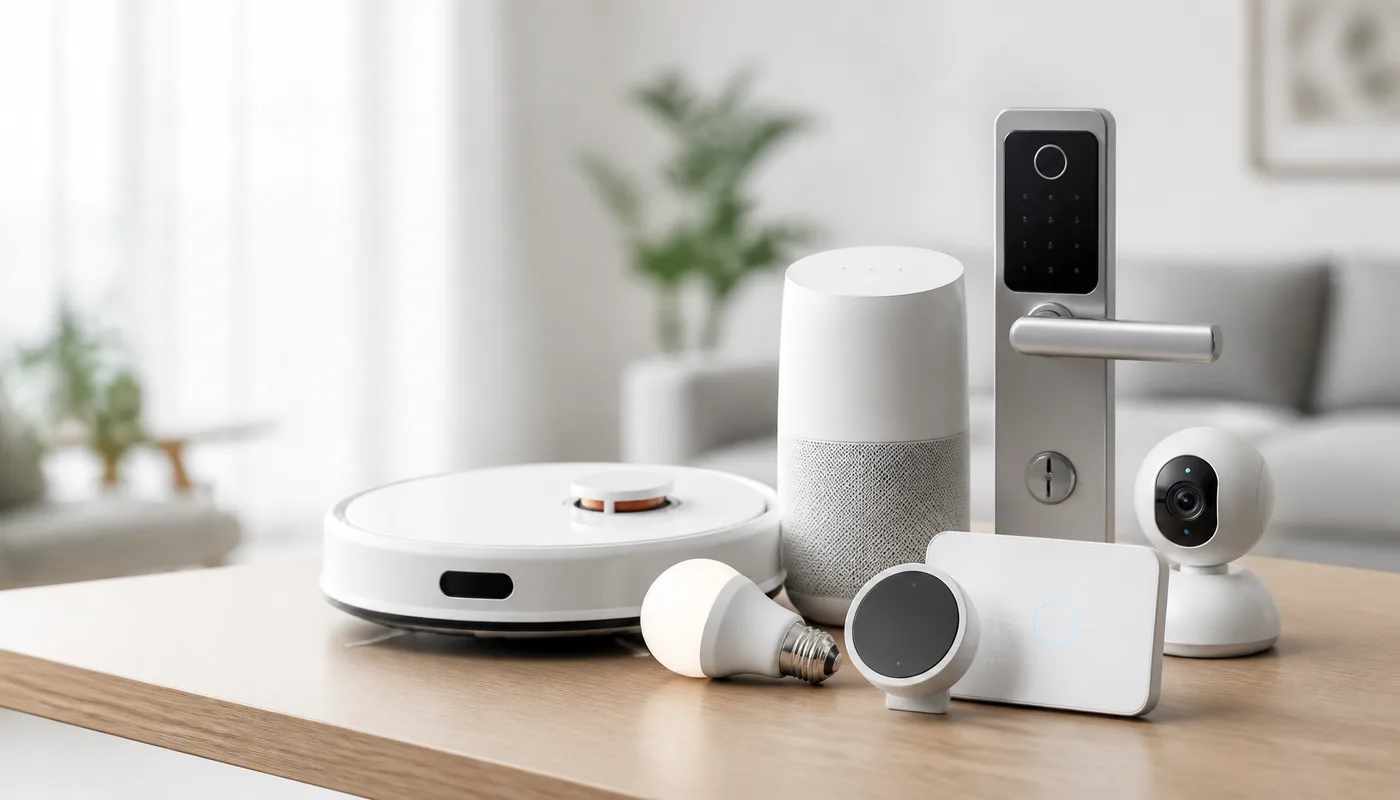
Smart home has moved from early-adopter novelty to mainstream retail. Robot vacuums, smart locks, security cameras and connected lighting now sit on shelves next to conventional appliances. For retailers, the margin story is compelling.
China manufactures the overwhelming majority of the world's smart home appliances and devices. If you want to wholesale smart home appliances and devices from China, this guide covers which categories to start with, how brand-based sourcing works, and how to place a first order without tying up your cash.
Why Smart Home Is a Strong Category for Retailers
Three characteristics make smart home devices attractive for small and mid-size retailers.
Rising, non-seasonal demand. Unlike fashion or seasonal goods, smart home purchases spread across the year, with peaks around home-improvement and holiday periods. Stock ages slowly.
Ecosystem pull. Customers who buy one smart device tend to buy more. A shopper who starts with a smart bulb often returns for a plug, a camera, then a lock. One sale opens a repeat-purchase pathway.
Brand recognition does the selling. Well-known Chinese smart home brands already carry global awareness. Reselling recognized brands means less customer education and shorter sales cycles than generic no-name hardware.
Best-Selling Smart Home Appliances and Devices to Source
- · Robot vacuums: Time-saving, high perceived value · Higher unit price, strong margin, bulky to ship
- · Smart locks: Security, rental/Airbnb market · Check regional door standards before ordering
- · Security cameras: Home security, pet/baby monitoring · Fast-moving, compact, easy to ship
- · Smart lighting: Low entry price, gateway purchase · Excellent bundle and repeat-purchase item
- · Smart plugs & sensors: Cheapest entry to smart home · Very light, ideal for consolidated shipments
- · Air purifiers & humidifiers: Air-quality awareness · Seasonal peaks, moderate volume
- · Wearables & trackers: Fitness and health tracking · Small, high turnover, low shipping cost
A practical starting mix for a new smart home shelf: one hero product (robot vacuum or smart lock), two mid-price items (camera, purifier) and several low-price gateway items (bulbs, plugs, sensors) that drive trial.
Sourcing from the Xiaomi Ecosystem
Among Chinese smart home brands, the Xiaomi ecosystem: including its MIJIA home product line and the wide network of ecosystem partner brands, is the most recognizable to international consumers.
What makes it work for resellers:
- · Broad: coherent catalog. The ecosystem spans vacuums, lighting, sensors, kitchen appliances, wearables and more. A retailer can build an entire smart home section from a single ecosystem, with products that pair naturally in one app.
- · Existing customer awareness: Shoppers frequently search for these products by name. Recognized brands convert faster than unbranded equivalents.
- · Consistent product design: A unified design language means the products merchandise well together, both on a shelf and in online listings.
What to watch:
- · Authenticity matters most: Branded goods attract counterfeits. Source only through channels that can document that products are genuine, and require your supplier to state it in writing.
- · Regional versions differ: Plug types, voltage, app region and language packs vary by market. Confirm the destination version before ordering, this is the single most common mistake with branded smart home imports.
- · Distribution terms vary by brand: Some products carry regional distribution restrictions. Clarify what you may resell in your market before you commit to volume.
Easy Buy China works with verified suppliers across 1000+ Chinese brands, including Xiaomi ecosystem products, helping retailers source recognized smart home appliances and devices through established supply channels.
Verified Suppliers: How to Avoid the Two Big Risks
Smart home sourcing carries two risks that generic product sourcing does not.
Risk 1, Counterfeit or refurbished units. A price far below market is the clearest warning sign. Genuine branded stock has a floor price; nobody sells below it at a loss. Insist on documented sourcing channels and pre-shipment verification.
Risk 2, Wrong regional specification. A perfectly genuine device is still unsellable if it ships with the wrong plug or is locked to the wrong app region. Specify your destination market in writing at quotation stage, not after production.
Both risks are addressed the same way: verification before shipment. Easy Buy China provides a 1-by-1 HD video inspection report for every order, so you see the actual units: packaging, model, regional version: checked before they leave China.
On certifications: smart home devices are electronic goods and your market will have its own requirements (CE in Europe, FCC in the US, and similar schemes elsewhere). Confirm the required marks for your destination with your supplier before ordering; we can advise on documentation as part of the sourcing process.
Starting Small: Low MOQ and Testing Demand
The traditional barrier to branded electronics was volume, factories and distributors wanted large commitments. That has changed for retailers working through a sourcing agent.
According to Easy Buy China's published retailer terms, MOQ can start as low as 10 units, which changes how you can plan a smart home range:
- · Test before you commit: Order a small quantity across three or four categories, see what actually sells in your market, then scale the winners.
- · Spread risk across categories: Rather than betting your budget on one hero SKU, sample the range: smart home buying behavior varies significantly by region.
- · Keep cash free: Small initial orders preserve working capital for marketing and restocking, which matters more than a marginally lower unit price on a large order.
Multi-supplier consolidation makes this practical: products from several suppliers are collected into one shipment, so a mixed test order does not mean paying separate freight on every category.
From Order to Shelf: The Practical Workflow
- 1. Send your product list and destination market: Specify categories, target price and the country you sell in: regional version depends on it.
- 2. Get a consolidated quotation: One quotation covering all categories, rather than separate negotiations with each supplier.
- 3. Confirm regional specification: Plug type, voltage, app language, packaging language. Confirm in writing.
- 4. Quality control before shipment: Review the video inspection report; check that model and regional version match your order.
- 5. Consolidation and packing: Multiple suppliers combined into one optimized shipment to cut freight cost.
- 6. Delivery: Easy Buy China ships to 50+ countries with door-to-door delivery, including to warehouses and Amazon FBA centers, with fast replenishment cycles once your range is established.
For a detailed breakdown of shipping methods, freight costs and customs procedures, see our companion guide on shipping from China.
Common Mistakes When Wholesaling Smart Home Devices
- Ordering before confirming the regional version. The most expensive mistake in this category, and the easiest to avoid.
- · Chasing the lowest price on branded goods: Below-market pricing on recognized brands usually signals counterfeit, refurbished or grey stock.
- · Starting with only the hero product: Robot vacuums are attractive but capital-heavy. Gateway items build the customer base that later buys the hero product.
- · Ignoring after-sales: Smart devices generate setup questions. Ask your supplier what warranty and support documentation comes with the goods.
- · Skipping pre-shipment inspection: For electronics, verifying the actual units before they ship is not optional.
Getting Started
Smart home is one of the few categories where brand recognition, repeat purchase and healthy margins overlap. The entry barrier is no longer capital, it is knowing which channel gives you genuine product at the right regional specification.
Send your product list, target price, quantity and destination country. Easy Buy China matches you with verified suppliers within 24 hours, with a \$0 consultation fee and low MOQ flexibility: so you can test a smart home appliance range before committing to volume.