
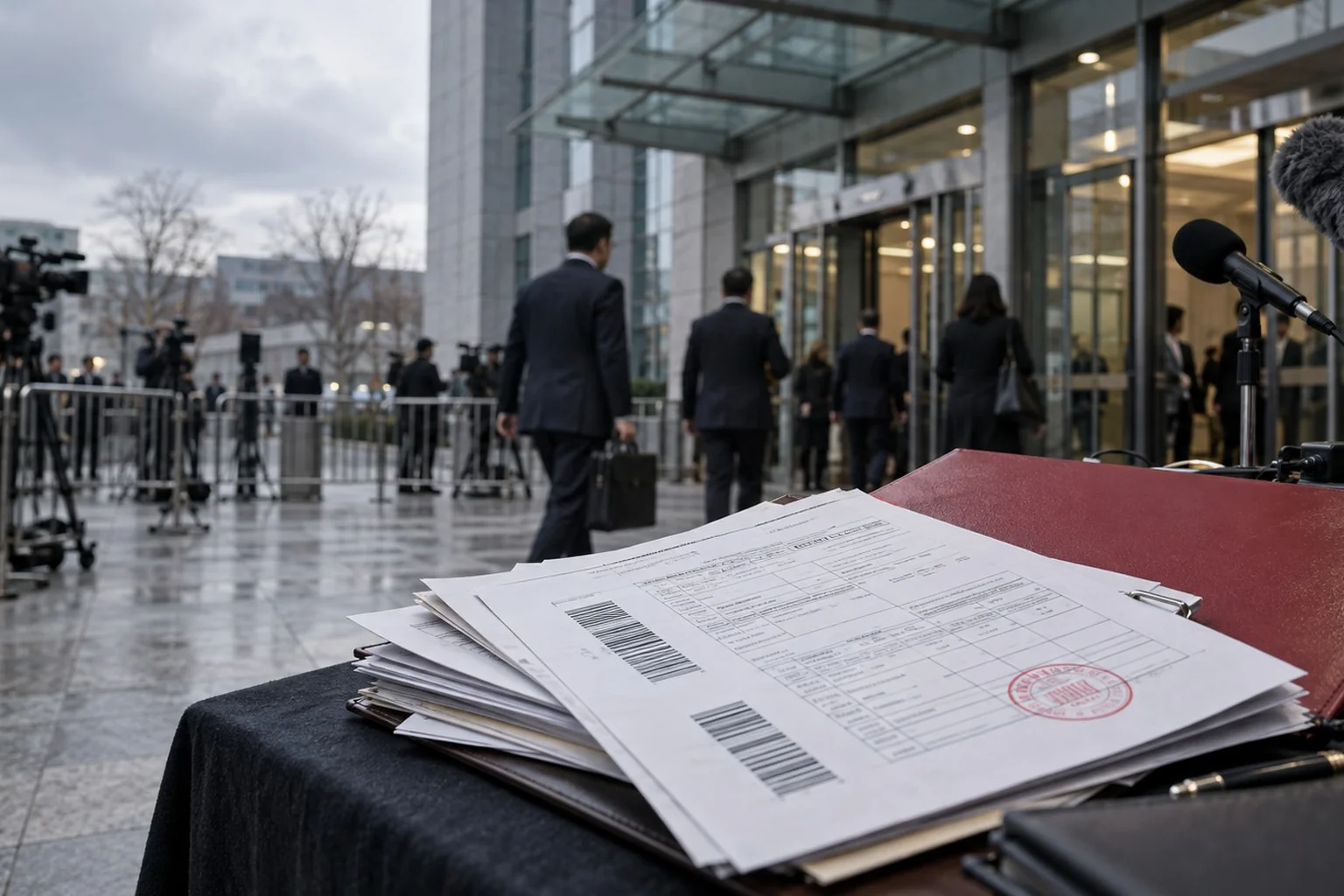
The US-China tariff truce was extended by two months on 24 September 2026, moving its expiry from November 10 to January 10, 2027. Nothing was reduced, nothing was removed, and no new agreement was signed. The deadline simply moved.
For a sourcing business, that is not a small thing. A truce deadline is a date on which a set of tariff rates can change without warning, and every order that will still be in production or on the water at that date is exposed to it. The interesting question is therefore not what happened at the summit. It is where the new date falls, and what has to be finished before it arrives.
The wider shift this belongs to, where trade policy became a sourcing constraint rather than a background condition, is covered in our 2026 sourcing trends analysis. For the arithmetic of moving production out of China and what it actually costs, our comparison of sourcing from China versus Vietnam works through the numbers. What follows is narrower: what changed on 24 September, what remains unresolved, and how to plan around a deadline nobody in your supply chain controls.
What Actually Changed at the Summit
President Trump hosted President Xi Jinping at the White House on 24 September 2026. The concrete economic outcome was a date.
- · The mechanism: Treasury Secretary Scott Bessent said the two sides agreed to extend by two months the trade agreement that ended the previous year's trade war
- · The original date: that agreement, struck in Busan in November 2025, was due to expire on 10 November 2026
- · The new date: 10 January 2027
- · What the truce does: it caps US tariffs on Chinese goods at approximately 20 percent, according to reporting on the agreement, after a tit-for-tat escalation had briefly pushed rates into triple digits
- · What it does not do: it is a pause, not a settlement, and Bessent framed the extension as buying time to see what could be done on the economic front
The Two Numbers That Get Confused
Two tariff figures circulate from around this summit, and they are not alternatives to each other. They measure different things.
- · The first figure, approximately 20 percent, is the cap the truce places on US tariffs on Chinese goods, reported as the ceiling the Busan agreement established
- · The second figure, a reduction from 57 percent to 47 percent, is the average tariff burden across Chinese imports, which is a broader measure that includes duties predating this truce
- · Why this matters to a buyer: the average tells you what the trade relationship looks like in aggregate, while the cap tells you what is actually scheduled to change if the truce lapses
- · The practical rule: do not use either figure as the rate on your own product. Your line-level rate depends on the tariff code, the product and which measures apply to it
What Both Sides Undertook, and What Fell Short
The extension was agreed against a scorecard of commitments from the earlier agreement, and the reported performance was mixed.
- · Met: China was meeting its commitment to purchase 25 million tonnes of US soybeans, per Bessent
- · Behind: Beijing was lagging on a pledge to buy $17 billion in other agricultural goods
- · Unresolved: US officials said deliveries of rare-earth magnets and other critical minerals had not been up to standard, despite being part of the earlier truce
- · Pushed forward: tariffs, Chinese purchases, rare-earth supplies and technology restrictions were all deferred into the next round of negotiations rather than settled
- · The consequence: the extension removed a near-term risk without removing the reason the risk existed
Why Two Extra Months Is Not Two Months of Certainty
A short extension changes the calendar. It does not change the underlying position, and the reporting was unusually direct about this.
- · Reuters described the outcome for companies as a familiar form of instability, in which tariff rates remain lower for now but decisions must still be made against a shifting policy backdrop
- · Analysis of the summit concluded that the extension postponed uncertainty rather than eliminating it
- · The chief downside risk identified was another deadline-driven confrontation in early 2027, which is precisely the period the extension now covers
- · Analysts briefed on the talks described a renewed truce rather than a breakthrough as the realistic outcome, with one characterising the status quo as both sides' best expectation
- · The honest summary: you have been given two more months to make decisions, not two more months of stability
What January 10 Lands In the Middle Of
This is the part that matters most for anyone importing from China, and it is a scheduling problem rather than a policy one.
- · Chinese New Year falls on 6 February 2027, with the official holiday arrangement normally published late in the preceding year
- · Logistics providers that plan around this cycle commonly describe a supply chain shutdown running from late January into mid-February 2027, with production stopping well before the holiday itself
- · That means 10 January 2027 arrives during the final stretch of pre-holiday production, not in a quiet period after it
- · For anyone selling into the first quarter of 2027, the order placed in November or early December 2026 is the last one that lands comfortably
- · So the new deadline sits inside the window in which Q1 orders are being produced, which is the worst possible place for an unresolved tariff decision to land
The holiday timing itself is set out in full in our Q4 holiday sourcing calendar, including the production, inspection and freight cut-offs for each window. What the tariff date adds is a second, unrelated deadline running through the same weeks.
How to Plan Around a Deadline You Do Not Control
You cannot influence the negotiation. You can decide where your exposure sits when it resolves, and the options are limited but real.
- · Split the order: place the Q1 volume that you can commit to now, and hold the speculative portion until the position is clearer
- · Front-load what is certain: anything with a fixed retail or contract date should be produced and shipped before the holiday, not after
- · Price with a band rather than a point: if your margin only works at one tariff level, that is not a margin, it is a bet
- · Fix classification early: your exposure depends on the tariff code, so confirm it with your supplier before volume production rather than at the port
- · Keep goods moving before the shutdown: the pre-holiday freight market is already tight, and space is a separate constraint from tariffs
- · Decide the trigger in advance: agree internally what tariff level changes the order, so the decision is not made under time pressure in January
The Pre-Deadline Checklist
- · Confirm the tariff code and current rate for your specific product, not for the category
- · Ask your supplier which of your orders will still be in production on 10 January 2027
- · Identify which orders will be on the water on that date, since they are exposed regardless of what is decided
- · Set a date by which the order must be placed to clear the holiday shutdown, and work backwards from it
- · Check whether your supplier has capacity before the holiday rather than after, because the queue forms early
- · Agree in writing who absorbs a tariff change that occurs between order confirmation and arrival
What Happens If the Talks Fail in Early 2027
Nobody involved in the talks described a collapse as likely. But the extension exists precisely because the harder questions were not answered, so it is worth knowing what the exposure looks like.
- · The stated risk: another deadline-driven confrontation in early 2027 if the broader talks do not progress
- · What could return: the tariffs and retaliatory restrictions that the truce has been holding in suspension, in a period of already elevated average duties
- · Why timing compounds it: a tariff change in January collides with a production standstill, so there is no opportunity to expedite a replacement order at short notice
- · The asymmetry to note: front-loading costs carrying cost and warehouse space, while being caught out costs margin and possibly the sale
- · The mitigating factor: the truce has already been extended once, so a further extension is a plausible outcome rather than an exotic one
FAQ
When does the US-China tariff truce expire now
The truce was extended by two months on 24 September 2026, from 10 November 2026 to 10 January 2027, according to Treasury Secretary Scott Bessent.
Did the summit reduce tariffs on Chinese goods
No new reduction was announced as part of the extension. Negotiators had been discussing tariff cuts covering roughly 30 billion dollars of trade, largely US energy and agricultural exports, but that was still under discussion rather than agreed.
Are US tariffs on Chinese goods 20 percent or 47 percent
Both figures are reported, and they measure different things. Approximately 20 percent is described as the cap the truce places on US tariffs on Chinese goods. The reduction from 57 percent to 47 percent refers to the average tariff burden across Chinese imports, a broader measure. Neither is a reliable guide to the rate on a specific product.
What did China fail to deliver under the truce
Reporting indicated China was meeting its commitment to buy 25 million tonnes of US soybeans but was lagging on a pledge to purchase 17 billion dollars in other agricultural goods. US officials also said rare-earth magnet deliveries had not been up to standard.
Should I place Q1 2027 orders now or wait
Waiting does not resolve the uncertainty, it only shortens the window in which you can act. The holiday shutdown from late January into mid-February 2027 means the orders that land comfortably are placed in November or early December 2026, which is before the tariff question is likely to be answered either way.
The Order of Operations From Here
The next few weeks contain two deadlines that are not related to each other, and the earlier one is easier to miss.
- · The freight deadline: space ahead of the holiday tightens before the holiday does, and rates on the transpacific rose again in the second half of September
- · The production deadline: your supplier's capacity before the shutdown is finite and is allocated in order of who committed first
- · The tariff deadline: 10 January 2027, which resolves during the shutdown rather than before or after it
- · The order that matters: anything you want on sale in the first quarter has to be produced before the holiday, which means the tariff decision will arrive after your orders are already placed
- · What follows from that: plan for the range of outcomes now, because January is too late to change the plan
The pre-holiday freight situation is covered in more detail in our look at transpacific rates ahead of Golden Week, which sets out why space tightens before capacity actually leaves.
If you want help working out which of your orders carries tariff exposure into January, our sourcing and purchasing service can review the order book with you, or you can contact the team directly to work through a specific plan.