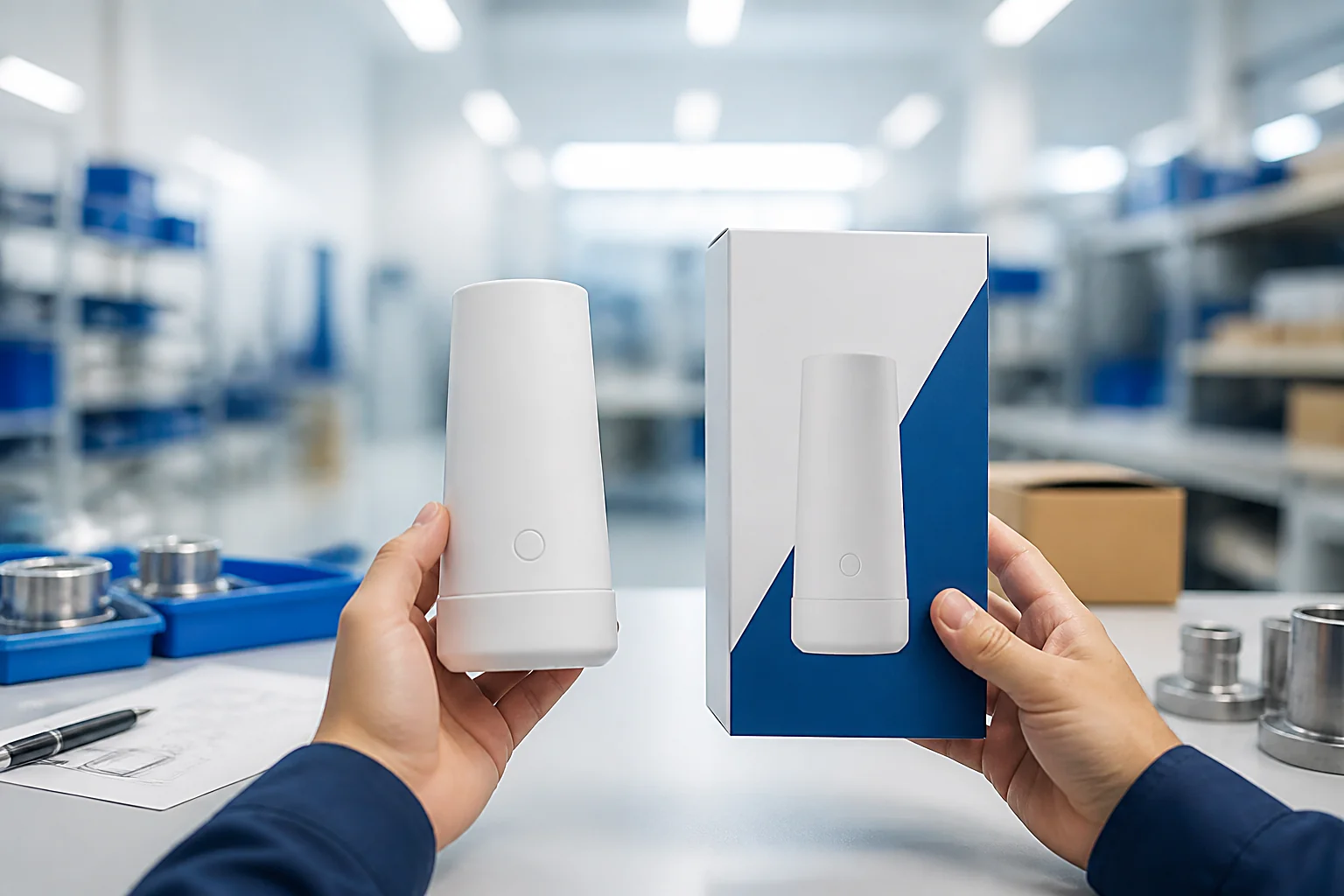
Selling another brand's products caps your margin and your control. Private label changes both: you own the product, the packaging and the brand recognition that builds over time. China remains the most accessible place in the world to manufacture a private label product, with factories that will work with orders far smaller than most people assume. This guide covers the terminology, when private label makes sense, how to go from idea to manufactured product, and what it really costs.
Private Label, White Label, OEM, ODM: What Each Means
The terms get mixed up constantly, and each leads to a different factory relationship.
- · White label: an existing product that any buyer can put their name on, the fastest and cheapest option
- · Private label: a product made to your specification from an existing design, with your branding and packaging
- · OEM (Original Equipment Manufacturer): the factory manufactures your design, your exact specification
- · ODM (Original Design Manufacturer): the factory designs and manufactures, and you brand the result, common in electronics
Most first-time brand builders start with private label or ODM, then move toward full OEM as volumes grow.
When Private Label Makes Sense
Private label is not for every product. It wins in three situations.
- · Recurring purchases: consumables, office supplies and household goods generate repeat orders that compound your brand equity
- · Price transparency: if customers can compare your product directly to a generic equivalent, branding protects your margin
- · Market gaps: when existing brands leave a niche underserved, a private label product can own it
If your product is a one-off trend item, private label rarely pays off before the trend fades.
Factory or Sourcing Agent
The first decision is not which factory, but how you work with factories at all.
- · Direct to factory: works when you already know the category, can handle QC and logistics, and order in large volumes
- · Via a sourcing agent: the agent shortlists verified factories, negotiates, manages sampling, inspection and consolidation, which suits first-time brand builders
For your first private label product, an agent usually delivers a better result than negotiating with five factories yourself.
From Idea to Sample
The product development path has clear stages.
- · Specification: write down materials, dimensions, functions, packaging and compliance requirements before contacting anyone
- · Factory shortlisting: agents or platforms provide candidate factories, check licenses and past export records
- · Sampling: order samples from 2–3 factories, compare quality, price and communication
- · Sample revisions: OEM services cover mold adjustments, material changes and packaging iterations until the sample matches your spec
Budget for 2–3 rounds of sampling. The factory that answers questions fastest is often the one that ships best.
Branding and Packaging
Your brand lives in the details.
- · Logo and design: work with a designer or use the factory's design support, but own the source files
- · Packaging: custom boxes, inserts and labels are affordable at private label volumes and change perceived value
- · Legal basics: register your trademark in your target market before ordering large volumes
Compliance and Quality
A private label product carries your name, so compliance is your problem, not the factory's.
- · Product standards: confirm required certifications for your target market, such as CE, RoHS, FCC or local safety standards
- · Documentation: keep test reports and certificates in your own records
- · Pre-shipment inspection: run quality inspection before shipment on every order, especially the first one
The Cost Structure
Private label costs are predictable once you see them.
- · Unit cost: 20–40% above generic wholesale, reflecting specification and branding work
- · One-time costs: tooling or mold fees where needed, sample costs and design work
- · Minimum orders: typical MOQ runs from 300–500 units for simple products to 1,000+ for molded or electronic items
- · Landed cost: add freight, duties and shipping to calculate your true margin
Private Label and Your Sales Channel
The channel shapes the product.
- · Amazon FBA sellers: private label is the standard playbook, with inventory and listing control
- · Retail stores: private label builds shelf loyalty and repeat traffic
- · E-commerce stores: brand ownership lets you escape price wars and build search equity
Start Small, Brand Long
Private label manufacturing in China is a long game with a short first step. Start with one product, keep the first order small, verify everything, and reinvest the margin into the next product. If you are ready to explore your first private label run, contact us and we will map the sourcing, sampling and production plan with you.